

You awaken up in an empty, forgotten town. Alone. You’re looking for someone with no idea of where to begin. And there’s something wrong in the walls, something uncanny in the air. Things are about to get much…worse. There are a dozen or so titles that will come to mind based on that short premise alone and survival horror side-scroller Silver Pines likely borrows from every last one of them. I’m not certain there’s anything particularly original in Silver Pines; but I stop short at the word ‘derivative.’
I didn’t grow up on Stephen King, never played Silent Hill or experienced Twin Peaks until well into adulthood. My own taste tended towards the sci-fi and the cosmic. Silver Pines shouldn’t have grabbed me. And yet it did. My interest is undoubtedly personal: the woodsy, rustic backdrops resemble my rust belt youth more than any film or game I’ve played in recent years. Horror, unsurprisingly, lives and dies on its atmosphere. You need a tangible sense of place. You need the viewer to feel present. Silver Pines has all of that in spades.
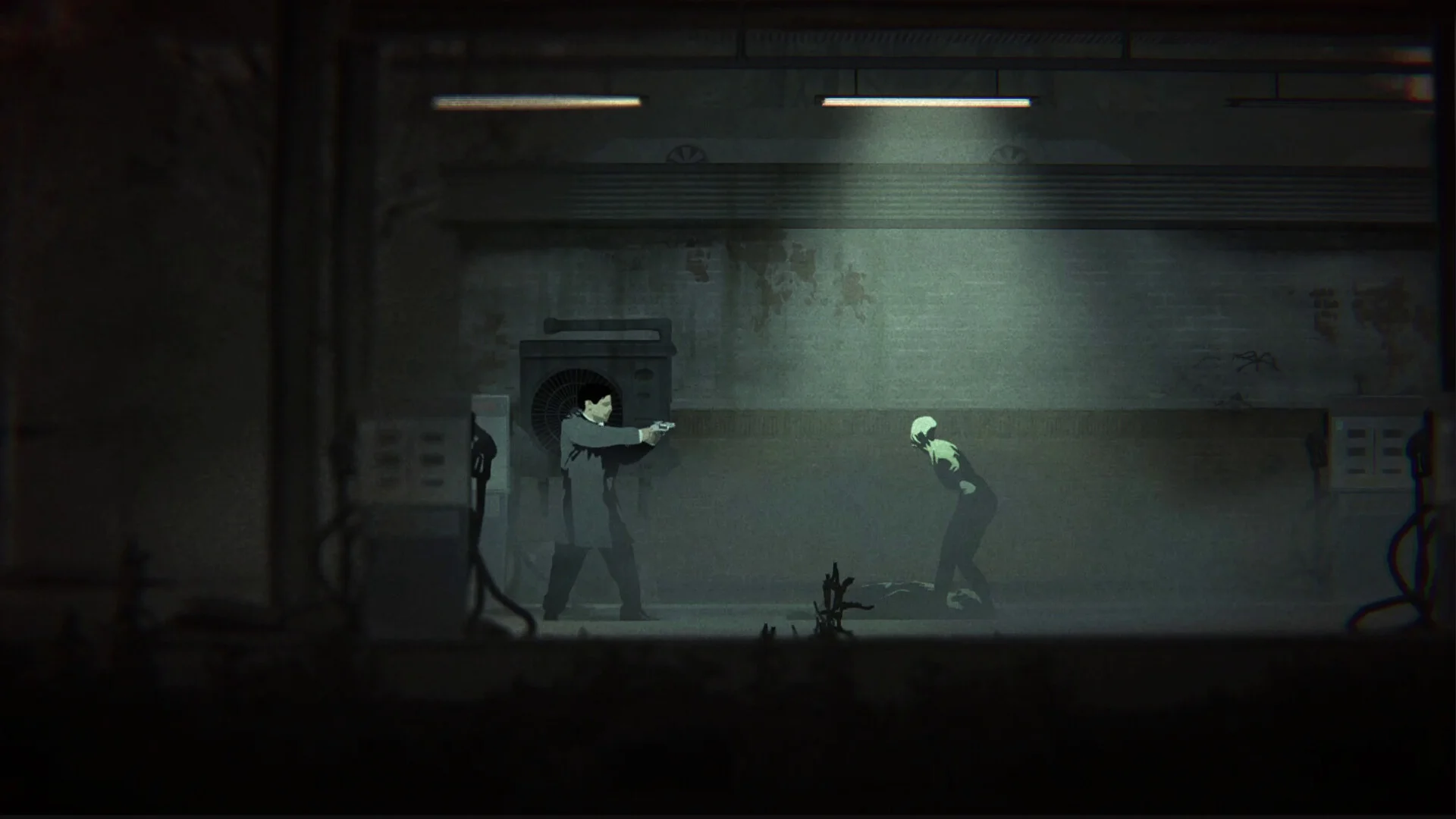
You play as Red Walker, a P.I. arriving in Silver Pines in search of missing musician Eddie Velvet. Details of the case are disturbingly foggy but occasional calls at phone booths (which also act as save points) provide Walker the opportunity to update a mysterious voice on the other end of the line. The town is mostly abandoned due to a major coastal storm, leaving only the stubborn and the unlucky stranded. Walker can count himself among the latter, effectively homeless and scrabbling for nickels and dimes just to call clients. But something else is stirring beneath Silver Pines, and it’ll take more than a rusty box cutter to survive.
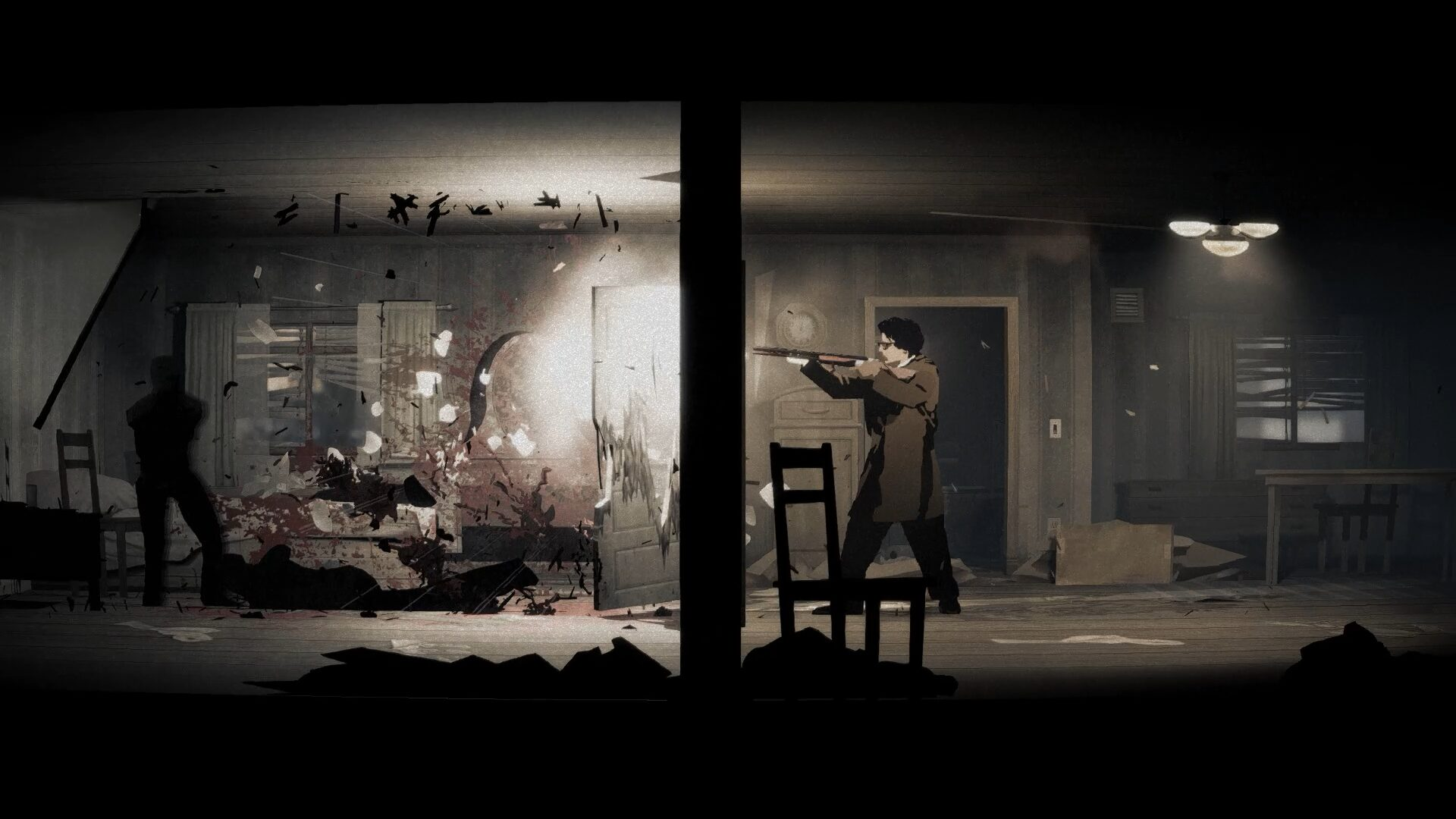
The biggest deviation from more traditional horror titles comes in its metroidvania 2.5D design. You’ll move back and forth between 2D layers featuring seedy motels, abandoned diners, and dark tunnels whilst tracking down various keys and passcodes to unlock shortcuts. Five-person development team Wych Elm has opted for an impressionistic approach to its visual style. Characters are drawn and animated in broad brushstrokes, meshing well with the bleak, painterly environments; evoking classic titles like Another World and Prince of Persia. Surprisingly, Silver Pines’ combat feels excellent to actually play. The timing on melee strikes, gun feedback, and dodging feel snappy and responsive. Special mention to the firearms’ lack of aiming reticule — all you can do is aim up and down — which adds a sense of ambiguity and tension to what is traditionally the safest form of survival horror combat.
Wych Elm have paid attention to making combat tactile and grounded. For example, melee weapons need repaired after use with found in the world. Instead of simply combining my box cutter and duct tape in the inventory, the game forced me into a timing-based minigame that, while difficult to truly fail, prevented me from confidently repairing weapons in the middle of combat. Gunplay itself revels in mechanical intricacy. Revolvers mandate each round be loaded separately with individual button presses and shotguns require a second pull of the trigger to expel spent shells; my ignorance of the latter cost Walker in his life at one point. A cynic might argue that failure is a poor way to tutorialise key mechanics but in a moody survival horror such as this it works perfectly.
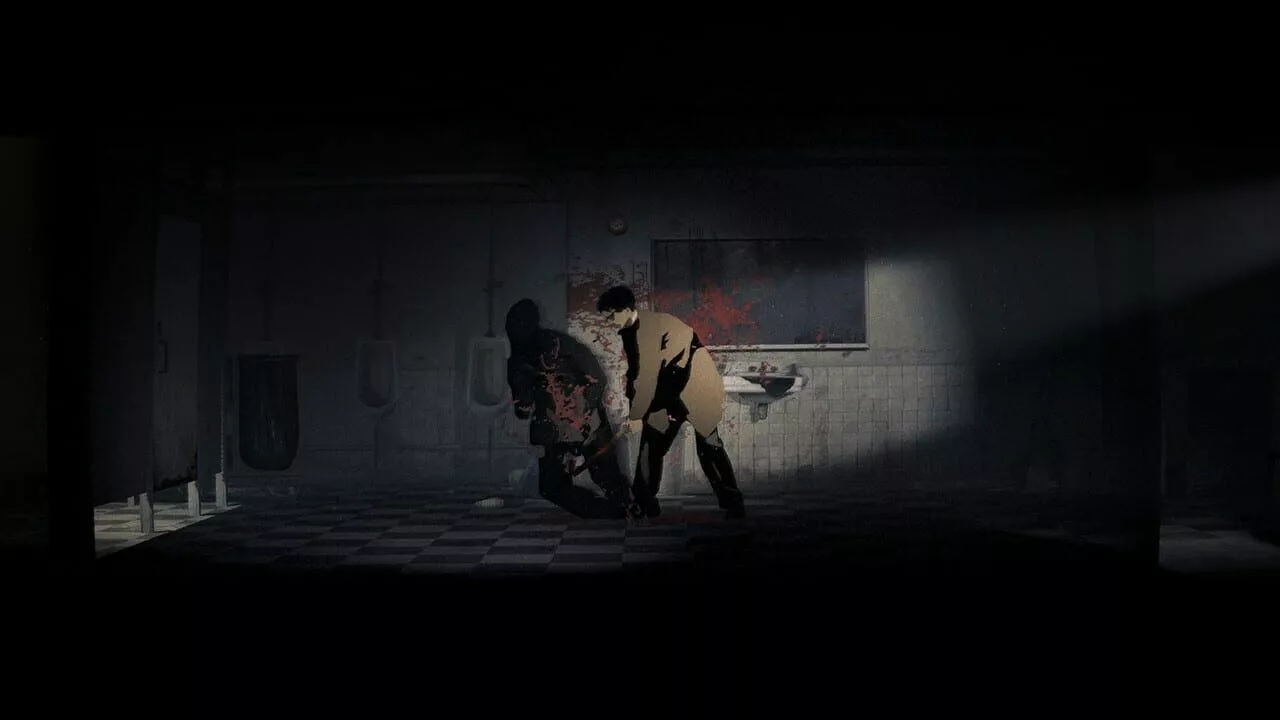
The resource economy is also expertly paced. Horror titles have a bad habit of underserving the player but Silver Pines instead gave me exactly what I needed as long as I explored its environments thoroughly. Never did I feel entirely helpless or completely overpowered. This is in no small part thanks to how well combat is structured throughout the experience. Enemies err on the beefier but never will you encounter more than two or three at once meaning you will often scrape through without having to reload or heal. However, backtrack for health or ammunition and you might find certain enemies have repositioned to less convenient areas. One particularly stubborn monster crawled up from the motel’s basement and into the lobby, blocking passage to a valuable lockbox, as part of a dynamic event that only occurred during my first playthrough. Unfortunately, these systems are somewhat undermined by the dodging mechanic, allowing you to push past enemies with minimal skill in exchange for a meager piece of the stamina bar. I’d prefer to see more restrictions placed on this ability or the skill level required to effectively deploy it increased.
My favorite moment in the Silver Pines demo is a simple one: perusing the contents of a vending machine. By the time I reached the second half of the demo I had picked up about twenty bucks. A box of shotgun shells for sixteen dollars, a couple revolver round for nine, and a few cheaper choices made it impossible to get everything I wanted. Silver Pines put real restrictions on me as a players and forced me to make decisions that I might regret. Was I confident in my ability to get through fights without any healing packs? Would I waste four shotgun shells faster than six bullets and a soda? I might be able to return but what if I’m locked out, or need something more than the machine’s scant offerings? These were simple choices but they stuck with me.
I left the demo extremely impressed with Silver Pines and I can see its systems’ potential to sprawl out into something far more tense, complex and engaging. The only real question is if Wych Elm will stick the landing and tell a story worthy of the game’s visuals and atmosphere. I can’t wait to find out.
Silver Pines launches on October 8 for PC, PlayStation 5, Xbox Series X|S, Nintendo Switch and Nintendo Switch 2
