

Maybe no genre benefitted from the jump from 64-bit to DVD quality as much as the horror genre did. While the foundations of it are firmly found on the PS1, survival horror developed into a major force on its successor’s turn at the wheel. Silent Hill, Resident Evil, Eternal Darkness, Fatal Frame, Haunting Ground, Siren. These all began, peaked, or reinvented during the sixth console cycle. Of the series recounted a few have stuck it out and continued to innovate, but have undoubtedly lost something in the process. With fidelity comes certainty, and nothing kills fear like preparing for it. It’s no surprise then that a number of small devs have attempted to recapture the look and feel of this era. I’d love to tell you Hollowbody has joined the likes of SIGNALIS and Crow Country in achieving that dream, but it hasn’t.
Within Cells Interlinked
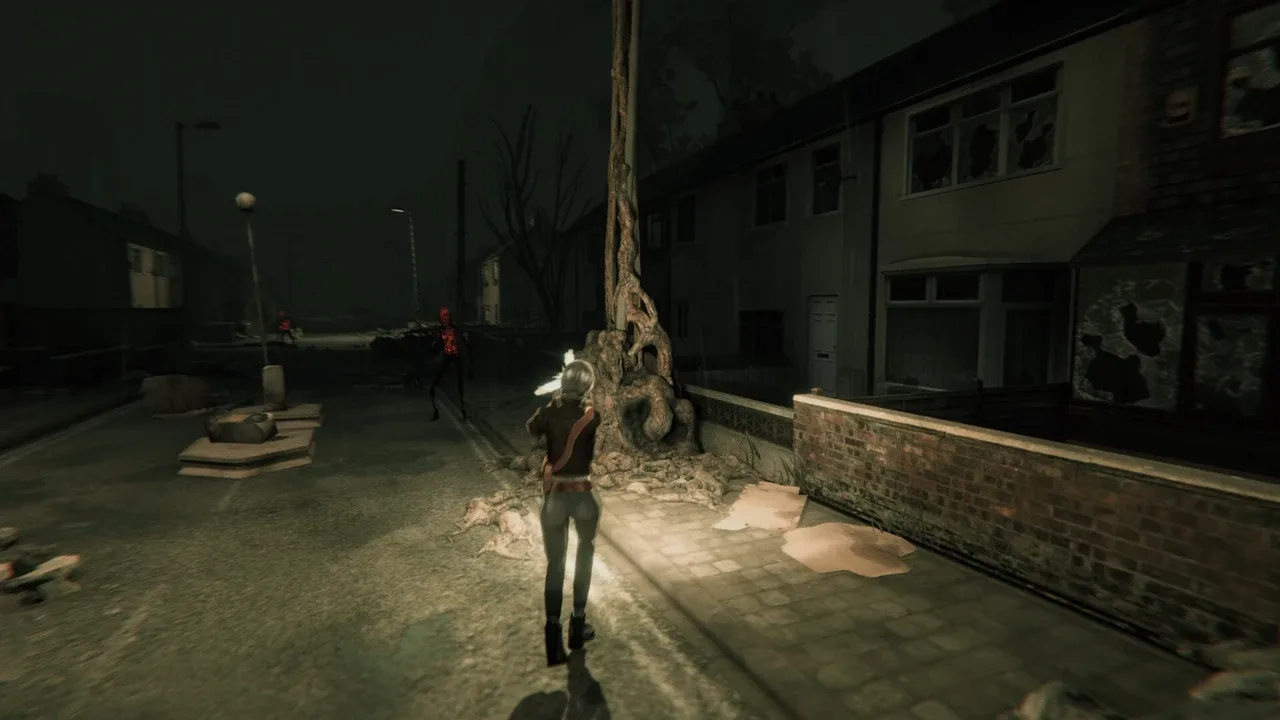
This is a death by a thousand cuts sort of deal. On paper Hollowbody succeeds at most of what it sets out to accomplish. Its atmosphere is dense and layered in ways that few games (including the otherwise excellent Silent Hill 2 Remake from a few years ago) ever achieve and the game has an added sci-fi hook to better separate it from its biggest influences. Mica, our heroine, arrives in the quarantined British Isles to look for her partner, Sasha, who disappeared near the city weeks ago. A distinct Blade Runner 2049 homage later, Mica crashes in the streets of the city, with nothing but a revolver and a radio to save her. As you imagine Mica discovers things in the city were a lot worse than she feared, and something else may be living in the ruins. There’s a lot of Silent Hill here, some Nier and Blade Runner, and maybe a smidge of 28 Days Later for flavor. As Mica surveys the environment she uncovers small tragedies in the tenements of the town awash in pink reds and sickly greens. It’s familiar, cozy kind of horror, one that transports you to a place so well defined you feel as if you’ve lived there before, monsters and all.
The problems come when you need to actually play it. Hollowbody features two ways to play, a set camera system like classic Resident Evil and Silent Hill, or a more traditional behind the back camera. The game is extremely clear it wants you to used fixed camera, something I was more than happy to do having discovered a late love for them with the original Resident Evil Remake. It’s easy to look at the highlights of the 2000s and feel that fixed cameras have more to give the genre, but it’s another to realize just how fine tuned those titles were. Huge work went into those titles to make those sequences seamless. In contrast, Hollowbody evokes the ‘other’ games in the genre, the deluge of subpar Resident Evils time has forgotten. At no point in my recent playthrough of Silent Hill 2 did I ever feel like I wasn’t in complete control. At no point in Hollowbody did I feel like I wasn’t stumbling around with a club foot.
I Had Your Job Once. I Was Good At It.
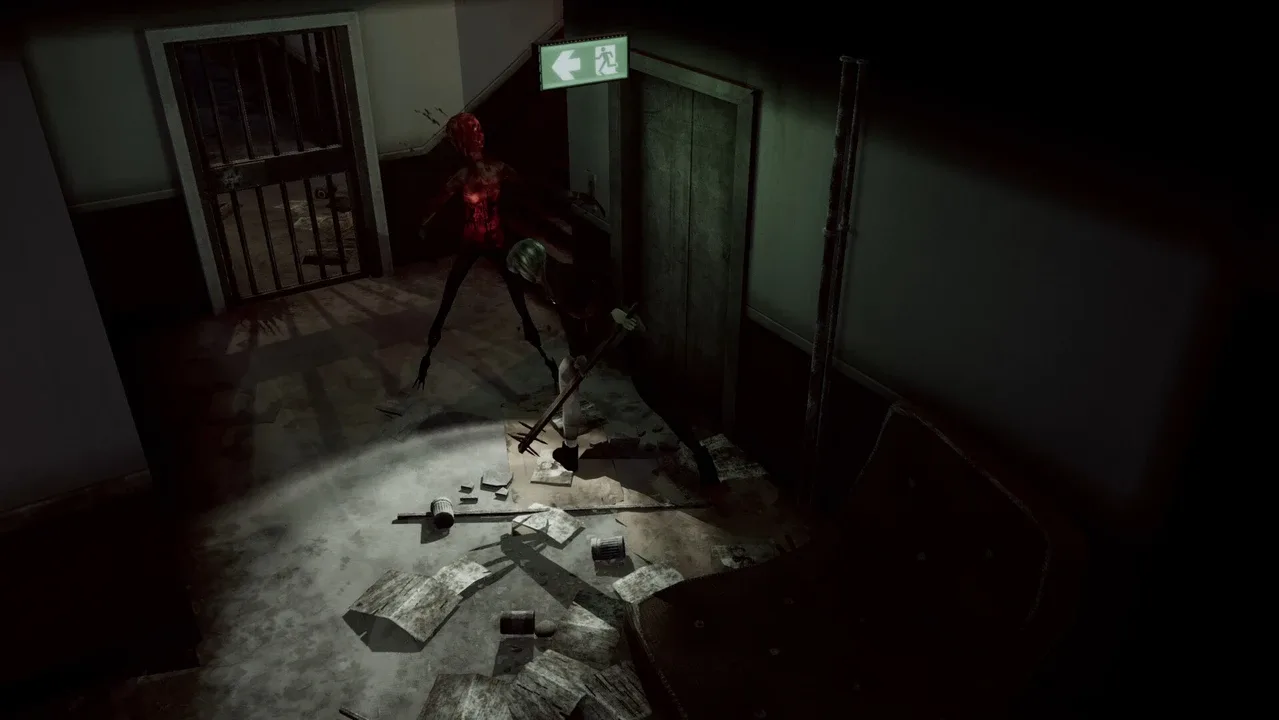
A common counter to this would be that horror games are scarier with bad controls because it makes it harder to deal with threats, ratcheting up tension. This is a total misread to me. Horror games are scarier with deliberate controls. Each attack must have a predictable wind up and cool down forcing you to consider the cost of every move. Hollowbody lacks a dodge button but also has a glacial walk back speed and criminally long quick turn mechanic, meaning you’re majorly vulnerable if an enemy decides to attack after being stunned, which they always will.
Compounding this is the scarcity of ammo, forcing you into the games extra awkward melee combat. Typically games with have a few different melee moves, a light and a heavy, either using different buttons or determined by how long you press the attack button. Hollowbody instead uses a sort of staggered combo system. An extremely staggered combo. Swing once you get attack A, swing again you get Attack B. Switch the second time 5, 10, or 15 seconds later, you still get attack B. If these attacks were just visual differences this would be a curiosity, but they often seem to hold unique properties that never line up when you need them. One weapon, a coilwound guitar, has an extremely useful Attack A and a completely useless Attack B. Any one of these issues would be annoying, but manageable. Together they formed into one of the most irritating moments I’ve had in a horror game, one where I was fighting a boss in the dark with no clear idea where it or I was and no clear idea if I was in range of its attacks or it in range of mine. A boss that required a lengthy run back and several unskippable cutscenes to rechallenge. I also had an AI companion who liked to block the exit with me.
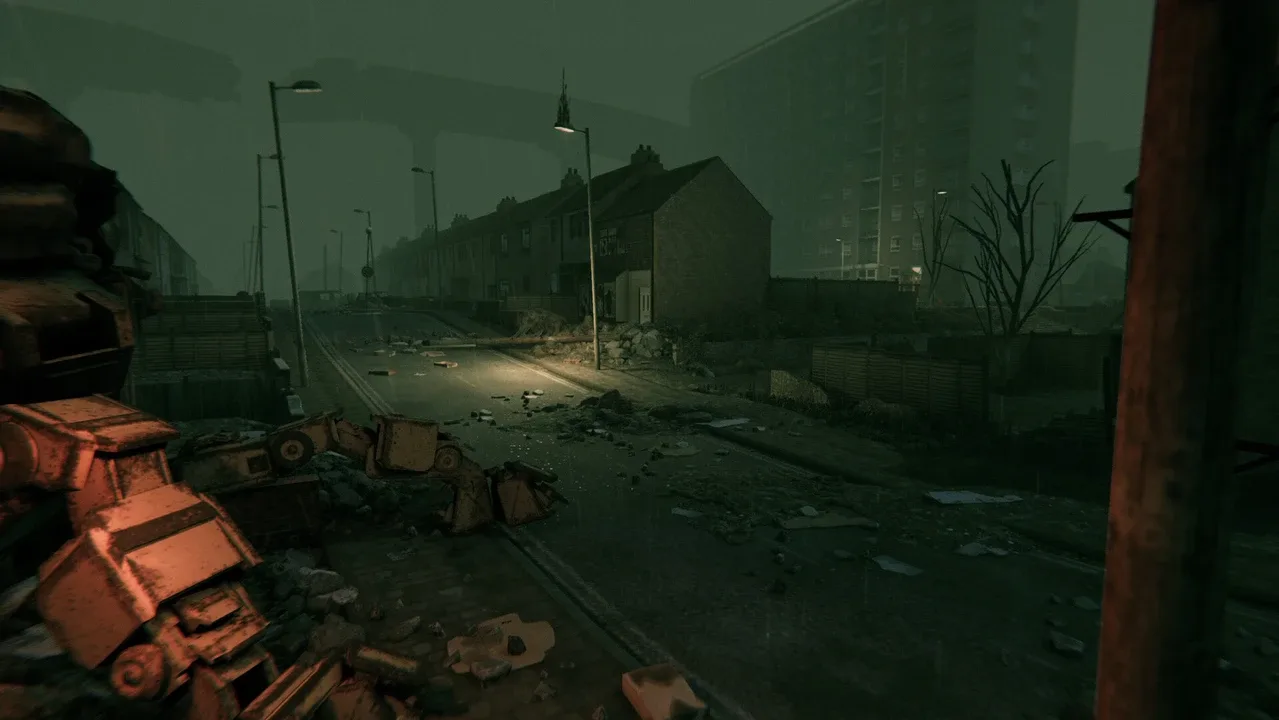
I should mention I discovered an optional weapon later that, had I explored a bit more would have alleviated some of this frustration, but it’s hard to find exploration compelling with readability so poor, an issue compounded by the console release I reviewed. Sitting twelve or so inches from the monitor meant seeing the shapes in the dark or the writing on the textures was a much more palatable task. Sitting across the room made it endlessly irritating. At one point the game tasks you with an electrical puzzle where you flip switches to get the voltage at the right threshold. “Match the voltage to the graph on the front’ it says. The problem is the graph is not illuminated, the flashlight is always on the panel proper. There is no first person look or way to change the position during the puzzle. Yo simply have to get close enough to the TV to make out the dark text at the edge of the screen or constantly fumble with the results until you luck into it. I ended up dying after this puzzle before the next save and had to redo it.
The final nail in the coffin for Hollowbody is the godawful map. The real joy of survival horror, old and new, is building a route and executing it perfectly. Few things are as pleasant as acquiring all the tools you need, mapping your route, and completing it seamlessly. It’s why despite both relative ease in combat both Resident Evil and Silent Hill feel endlessly replayable. Hollowbody does not feel endlessly replayable. In fact, it seems specifically designed to disorient you. This may not seem like such a bad idea for a horror game, but a map that offers no distinction between an open door and one that can never be opened just feels like it’s designed for time wasting. One set piece has you backtrack through a large black forest to find a particular home. In most games, the map would number the houses with their addresses, but Hollowbody doesn’t. Instead you’re forced to walk up to the deliberately low-res doors and read the numbers yourself, also from across the room in this case. It is nearly impossible to get a handle on yourself or your surroundings but the result isn’t tension, it’s tedium.
There’s A Little Of Every Artist In Their Work
I hate how harsh this sounds because the truth is Hollowbody is a labor of love. Developer Headware Games seems to be a mostly solo affair and the parts of Hollowbody that work are incredibly impressive. The fact a one man team cannot only produce something so close in tone and intensity to the peaks of the genre and even get it published on console is frankly inspiring. But it just has too many hiccups to come together the way it wants to. Were Hollowbody released eight or nine years ago when the indie horror boom was beginning I’d be far more forgiving of its shortcomings, but the field has gotten deeply competitive and some truly stellar titles now live in this space. And in some ways, some of the most important ways, Hollowbody surpasses them. But the ways that have you interact with the game moment to moment feels sloppy and rough. On PC, I suspect Hollowbody’s downsides can be overlooked, but the console port compounds these problems and adds long load times in between without the density or fidelity to justify it. In a world where games like SIGNALIS and Labyrinth Of The Demon King stand so tall, it takes more than grimey textures and colored lighting to make the journey worth it.
5 — Fine
Review copy provided by developer/publisher/PR group
