



Clumsy Bear Studio combines cooking, roguelite progression, and addictive deckbuilding in its new game, Hungry Horrors. The two-person studio released it into Steam Early Access earlier this month, and, at the time of writing, it has a 100% positive review rate on the platform, with over 100 reviews. The game is ambitious in its desire to combine numerous types of niches and even more ambitious coming from such a small studio.
Setting the table
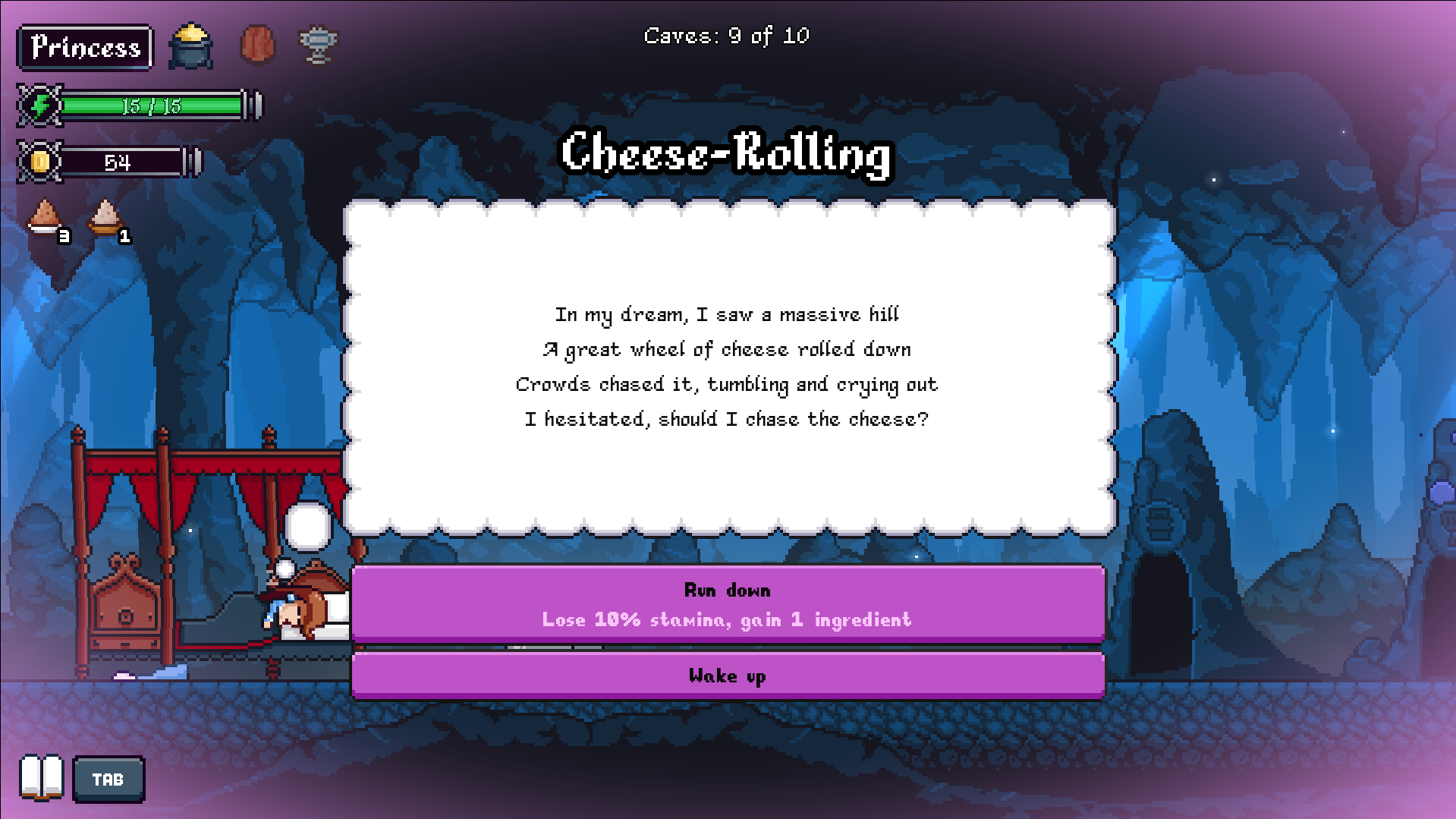
Hungry Horrors takes the common fantasy setting we see in roguelites up a notch; instead of battling and killing monsters that stand in your way, they are cursed to be hungry. As the princess of the land, it is up to you to ensure that they are fed, with traditional foods of the British Isles, and not yourself. The game uses traditional foods and traditional mythical beings. And it’s entirely folklore-based, down to even some NPCs that you meet throughout the story. It’s a setting rich in real-life comparisons and especially rich in nerdy lore. From Spriggans to Dullahans, mythological beings of all shapes and sizes show up, hungry and ready to eat. Players travel through different locations with their own unique enemies and bosses in standard roguelite fashion, progressing the story through multiple runs. It doesn’t reinvent the core of roguelites; it just tweaks it into a unique experience.
Behind the counter
Overall, the game feels well-made. Though I did stumble across what I assume to be bugs, especially one that kept me worried I’d lose a run, as I’d fill up a monster’s hunger meter, but they would still act out their next turn before disappearing. I noticed this happened a lot when I’d used hunger over time effects. I was fortunate enough not lose to it, but the fact that the monsters were able to act at all kept me a bit worried.
I also wish the game were more responsive to mouse-only control, and for the most part, it is. But it felt clunky. I know it’s more of a preference thing, but something that really draws me personally to deck builders is the ability to not worry about the standard WASD; I can click with my mouse and enjoy the game thoroughly. The game feels as if click controls are an afterthought addition rather than a true way to play.
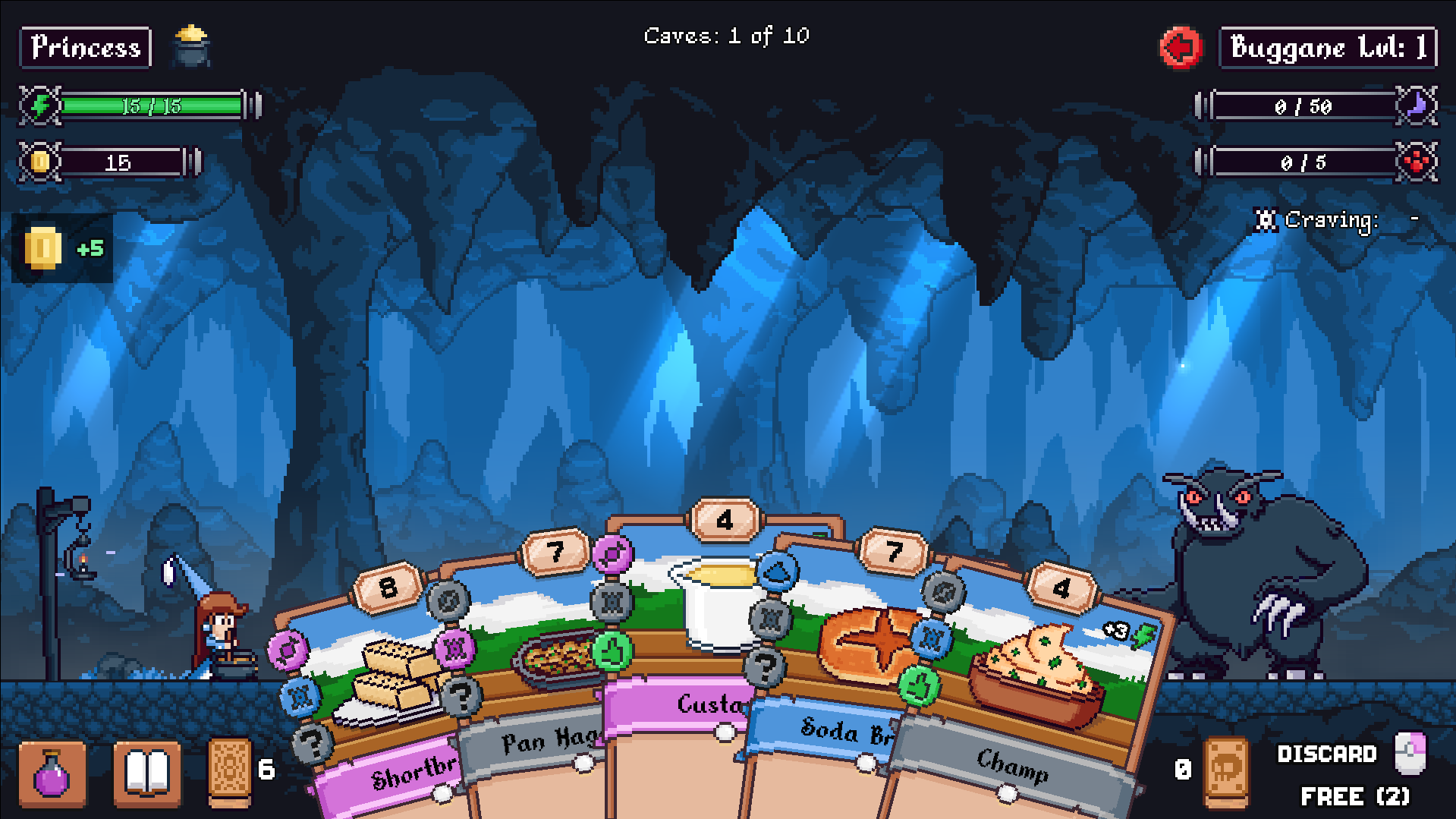
Other than the bugs and mouse issues. The game is really well-polished, especially for being from such a small studio, and in early access, with lots more planned. The sound was reminiscent of an arcade-y style that fit really well with the art design and felt nostalgic. I didn’t run into many problems that I’ve faced with my hand of cards, such as “stickiness” or easy mistakes that could be made. The design and reaction of the game, especially in battles, pleasantly surprised me.
The main course
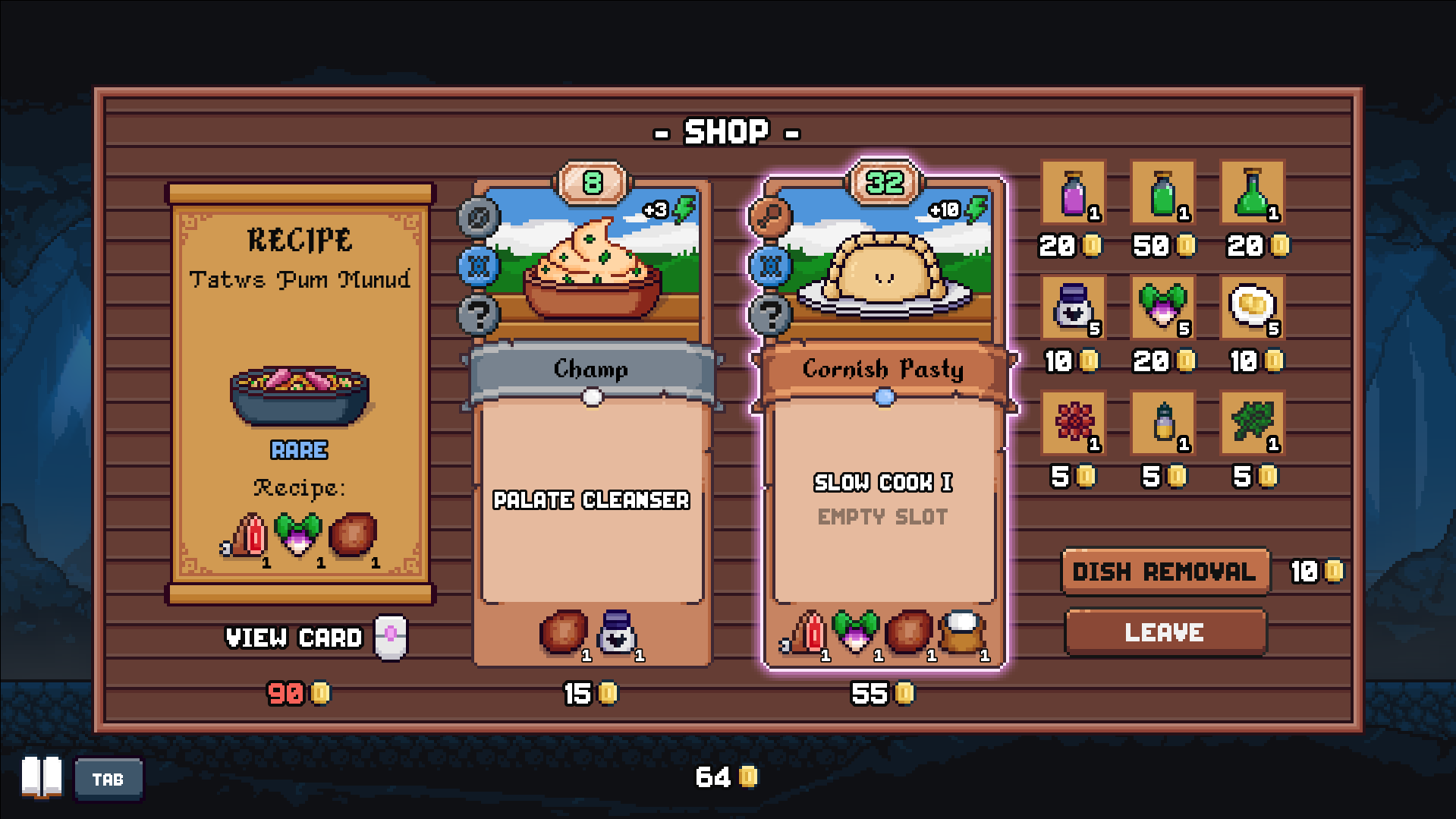
The gameplay loop is relatively standard for roguelites; you build a deck of dishes that you can then use in “battles.” Each dish has combos, and most have effects that can be used to create builds or synergies. I did enjoy the ability to easily choose each run a “main dish” that I wanted for sure to use and to synergize with. I was capable of doing that without feeling like I’d run into balancing issues or negatively impacting my play, which is another pleasant surprise from the game.
I felt truly able to make what I wanted to do work to a viable level. Especially with the game allowing me to utilize potions or seasonings that would help me further my goals of narrowing my build down without the standard “remove card” ability. The cookware or “trinkets/artifacts” as they are called in other games, feel really good in this department as well. Though I did start to notice a pattern of feeling like some were just constantly, outright better than others, leading to more of the same decisions during runs. Which is a bit concerning on the balancing side, but while playing, I more so feel it may just be a lack of more content side effect than anything, which is to be expected based on where the game is in its development.
I feel as if I say this a lot about early access games, especially roguelites, but there is a good foundation in it. I think it suffers from drawbacks that come inherently with early access, such as sometimes things feel “weird” or like there should be more to something that is not fully there yet. I do think, based on the notes in-game by the developers, that it is being actively worked on to iron out and fill out more, which is a good sign. It’s almost there, and if things continue at the pace that has been set, it could flourish more on the gameplay side of things.
The Final Bite
Hungry Horrors is incredibly unique. It mixes folklore with roguelite progression and arcade-y feelings. It’s interesting, and so far it seems to be doing quite well. It feels too early to make estimates on its success, especially due to its more niche nature, but it feels like a game to watch. It has a formula that is working, and once it gets more content inside of it, the only limiting factor will be its audience. It was an enjoyable game to play through and one that didn’t feel overbearing or like a chore to progress in. I especially liked how the game didn’t feel punishing to fail as it felt like I truly learned new information to take forward with every run I did, regardless of metaprogression upgrades.
Hungry Horrors will appeal most to those who have a nerdy fondness for folklore and those who are deckbuilding addicts. Instead of “number goes up.” The game rewards the knowledge you gain, and it is a key piece of the puzzle to unlocking the maximum amount of enjoyment the game offers.
Hungry Horrors is available now on Steam for $11.99. The game is currently discounted by 30% until February 2nd.

The Review
Good


