

Photorealism has become ubiquitous in videogames. Absent the time or budget required to render hair follicles or add ray tracing, certain developers have taken the opportunity to direct their innovation elsewhere and push imaginative, thoughtful gameplay systems. Mina the Hollower is one such game. Adopting Zelda’s top-down open-world structure, the gothic fantasy of Castlevania, and Soulslike risk-reward mechanics; a multitude of modern and retro influences coalesce into a satisfying, singular whole. From my first steps into the hostile sandbox of Tenebrous Isles, I was hooked.
Old Dog, New Tricks
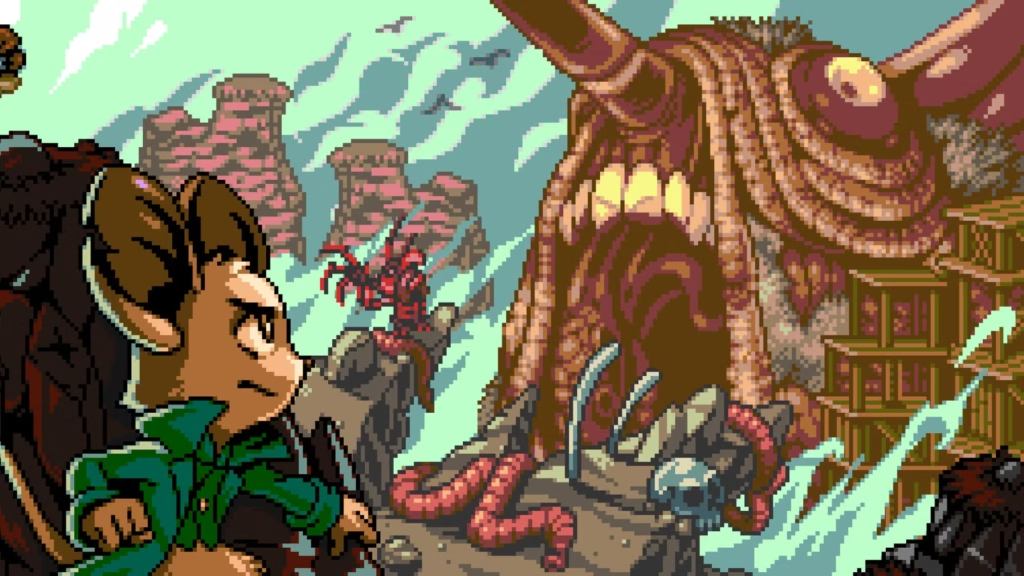
Mina arrives as developer Yacht Club Games first original title since 2014’s Shovel Knight, inspired by the 2D side-scrolling escapades of Mega Man, spawned numerous sequels and spin-offs. Their latest game similarly mines classics for an entirely new brand of retro action. Synth melodies and piercing bass lines play alongside reliably crunchy sound effects. Lightning crackles above castle spires and adorable animal sprites transform into ghoulish Lynchian portraits mid-cutscene. Mina the Hollower blends gothic architecture, steampunk fantasy, and schlocky haunted house vibes (all dressed up in the Game Boy’s 8-bit best) to stunning effect.
However, Mina herself is something of an enigma: part monster-slayer, part mad scientist. Recalled home by the philanthropist Baron Lionel to repair her island-powering Spark Generators, she must find the seven sparks strewn across the Tenebrous Isles and defeat saboteur-rebel Thorne. The impact of Mina’s actions on the denizens of city centre Ossex can be felt throughout the story but the narrative refuses to engage with the nature or impact of the machines on a thematic level. When is progress effective? When is it bad? How should it be implemented? The game poses these questions without ever answering them. However, all of those predictable twists and turns lead to an admittedly rollicking third act and chaotic final boss fight. Unlike so many games of the modern era, Mina the Hollower finished stronger than it started.
Dungeon Diving
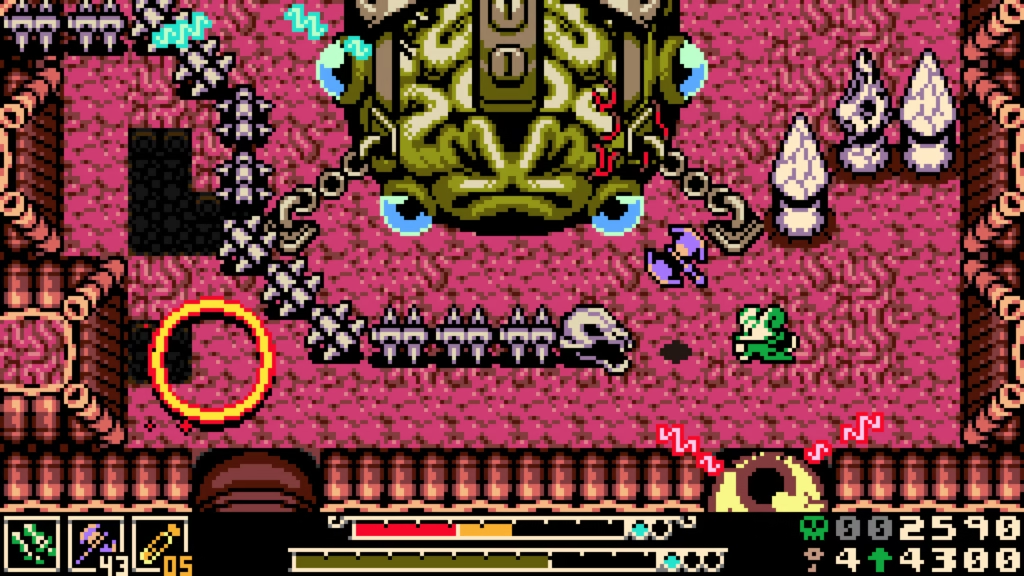
After an opening hour that takes you directly from shipwrecked docks to the city centre, Mina drops you in the middle of an expansive open world without clear direction. Tenebrous Isles is a purist’s open world: entire dungeons and side quests hidden behind destructible walls, secret passages, and underground tunnels. Absent an overworld or mini-map, Mina will demand your undivided attention if you wish to uncover each and every secret.
Mina also borrows an array of risk-reward mechanics from the Soulslike tradition. The first time Mina perishes, your ‘bones’ (which are used to upgrade attack, defence, sidearm damage, and more) will be placed in a ‘spark’ beside the nearest enemy or ledge; the second time, those resources are lost forever. Furthermore, unwanted bones can be put into a savings account of sorts in Mina’s homebase, the Underlab, and released later in the adventure. Exploration is thus at once rather risky and yet extremely rewarding. Should you save your bones for later, and follow the path of least resistance, or explore an enticing secret area at great risk to your hard-earned cash? The choice is always up to you. More than once, I lost everything, but Yacht Club deployed enough strategically positioned shortcuts that taking on the same challenge again and again never became tiresome.
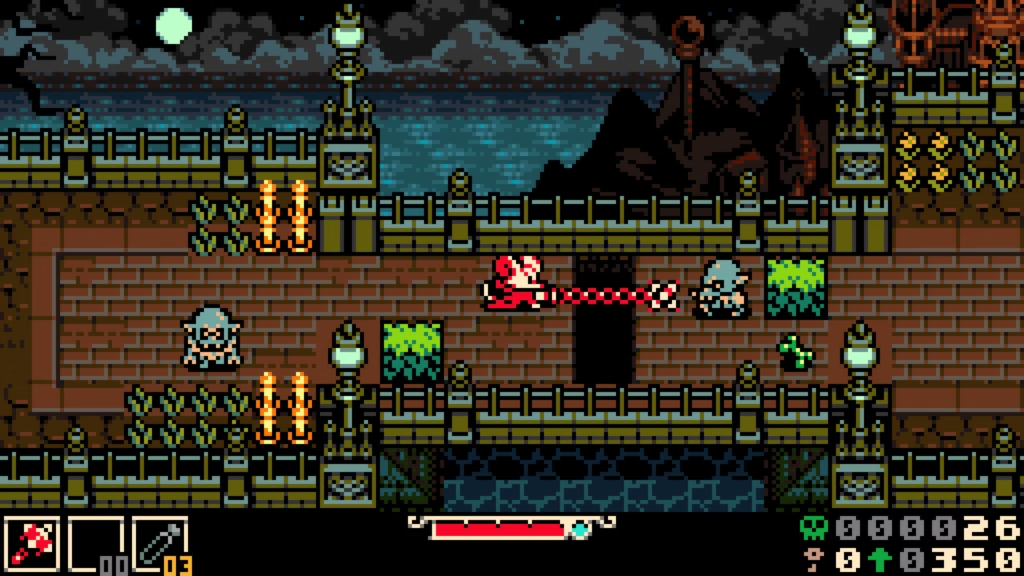
Post-tutorial, you’ll have at least four main dungeons to attack in any order you wish. My first, Queensbury Crypt, populated an eerie graveyard with shambling zombies, crumbling stone paths, and imposing gargoyles. Every dungeon had a distinct visual flair from beachfronts to swamps all with their own varieties of enemies, secrets, and platforming challenges; the autumnal ambience of the Septemberg region particularly stood out, wherein powerful gusts of wind blow Mina off course. Finally, the game’s aforementioned hub area of Ossex is an absolute marvel; brimming with whimsy and eccentricity. Kick the can with local youths, chase down pickpockets, and unlock secret areas between dungeon excursions. It’s everything that makes the game unique in four city blocks.
Cats & Mouse
Enemy encounters are plentiful and punishing in equal measure. Positioning is arguably the most important element of combat and it’s here where Mina the Hollower earns her namesake: by holding the jump button you can burrow underground and surface elsewhere in the arena. Burrowing is incredibly versatile: it’s a dodge, double jump, and dash all in one. There was a rather steep learning curve to properly deploying the skill but weaving over and under enemies became something approaching a dance, and an indispensable tool in my arsenal.
A broad assortment of weapons, sidearms, and trinkets form the backbone of a surprisingly malleable build system. For example, I favored the long-range strikes of the Nightstar Mace to create distance between Mina and the enemy combined with wackier sidearms such as the Iron Steed (joust-mounted bicycle), Mist Jar (phasing dash), and Deflector Parasol (umbrella shield); supplemented by trinkets that provide boosts to damage and defence amongst many others.
Verdict
Mina the Hollower brings together a comprehensive collection of mechanical influences and visual styles to craft an engrossing, singular 8-bit adventure that delights as much as it innovates.
9 — Superb
Review copy provided by developer/publisher/PR group
