
Some video games just don’t come out. Films may not get financed and books may not be published, but for games it always feels a bit more biting. For games, by the time you see an announcement trailer, so much work has already been done that it seems especially somber when it disappears into the ether, never to be seen again. Sometimes this is for the best, history is full of projects that took elongated dev time, came out, and were only notable for sheer disappointment. When Routine was announced in 2012 there was nothing like it, not in the AAA scene, not in the indie scene, not in theaters. Its world felt so vivid and real that even as years passed without updates and the distinct retro futurism strewn through its halls began to creep into other projects I still felt a tinge of sadness that it slipped into the dark, gone. Then it came back.
My eyes went wide when it resurfaced at the 2022 Summer Games Fest. It had been almost a decade since I last heard major news about the title so to see it show up, much less at a show that presumably vetted its attendees to make sure they were legit, was shocking. Now, three years later, here we are, and while there may be games with longer or more tumultuous development cycles, I’m not sure any of them have stuck the landing as elegantly as Routine.
Small steps for a lone man
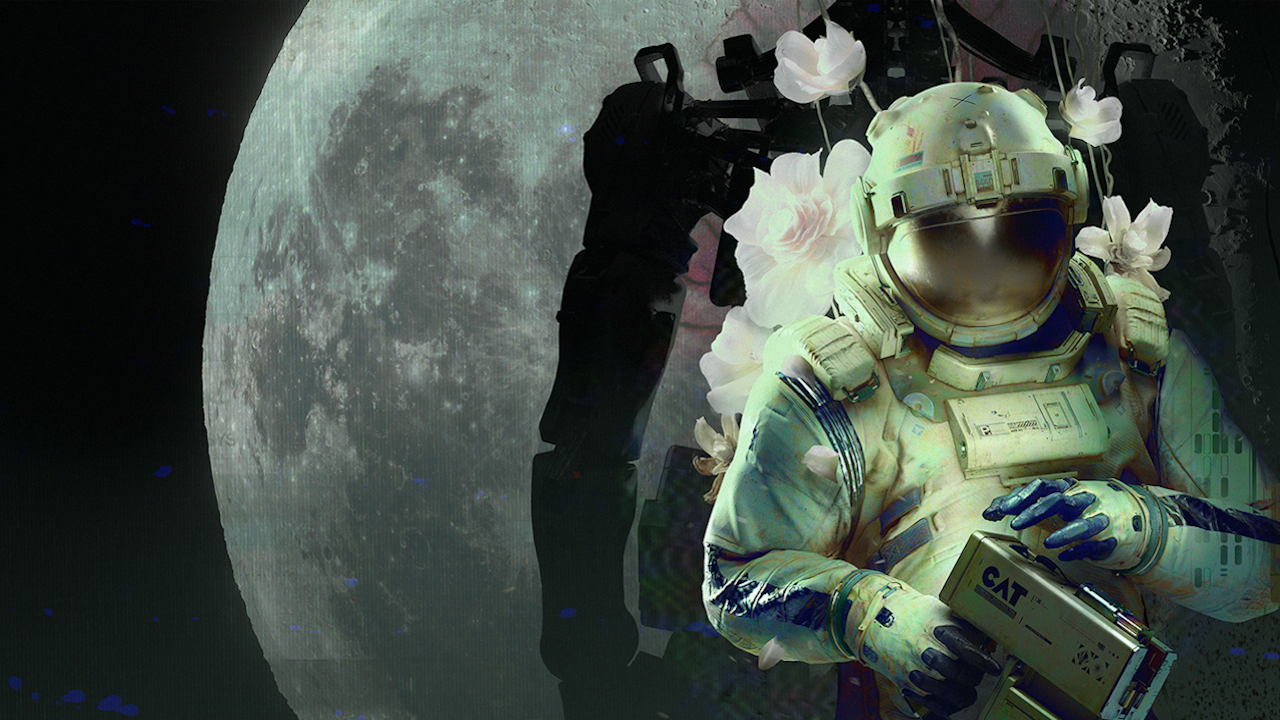
Taking place on a lunar base you wake up from your mandatory quarantine to find the facility empty. Armed with your trusty CAT (Cosmonaut Assistance Tool) you follow a trail of bread crumbs to uncover, and hopefully resolve, whatever’s happened here. There is significantly more to the story of Routine, but its strength isn’t in familiar ideas, but in expert execution. By now if you set a game on a spooky space station you probably know how it’s going to go: you’ll ruffle through cabinets and computers for documents, listen to cryptic audio logs, and observe bloodstained halls and corpses from unseen conflicts. Routine elevates these systems by making them feel more organic. Audio logs are distorted just enough to not feel like mp3’s playing in your helmet and documents are printed in vibrant color rather than just pure text. At one point, a puzzle involved going over the notes of a scientist. Rather than printed or a reskinned text document, the game offered up genuine handwritten color coded notes, written in a way that felt natural and intuitive.
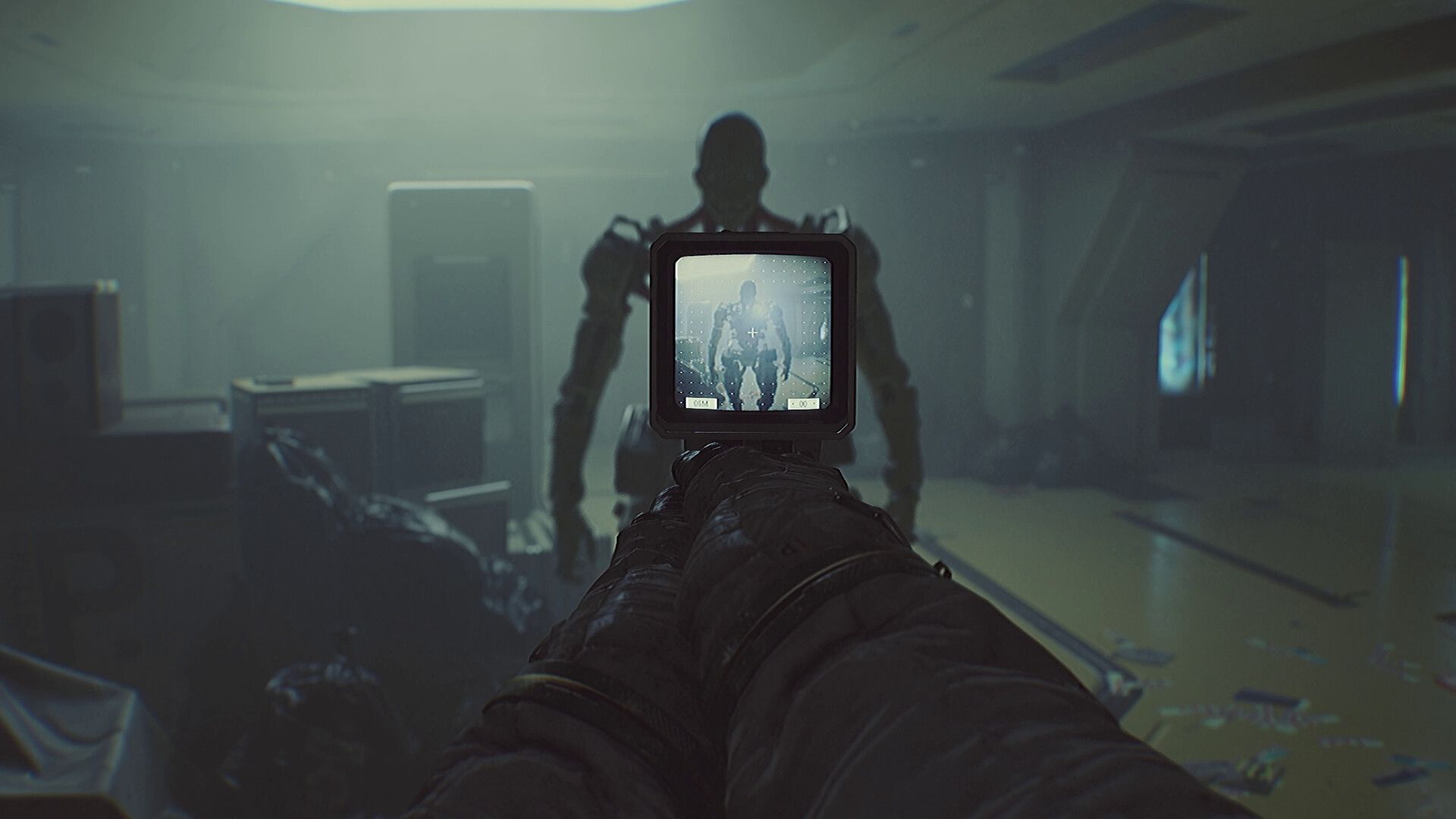
This is the core strength of Routine, it feels real in a way games just don’t. Under a haze of film grain and soft diffused light is a haptic world that indulges one of life’s great pleasures, the tight click clack of buttons. Lacking any sort of UI aside from a pause screen, Routine instead puts your entire inventory onto your sole companion, the CAT. Aiming with the CAT is surprisingly nuanced, allowing you to adjust both your peripheral vision and your fine control over the device when aiming through its ancient viewfinder, one that moves at a silky smooth seven frames per second with resolution to match. As a result you rely as much on what you can see outside the screen of the CAT as what’s displayed on it properly, requiring more awareness of your environment than most games. Your CAT isn’t just for combat, it’s also your main method of interacting with the environment itself. Pulling your CAT up lets you adjust its functions on the fly, changing from combat to blacklight and back again. Each of these systems is a deliberate, multi step process that could easily become tedious if it weren’t for the incredibly satisfying feel of pressing these digital switches. If you ever wanted to show someone why buttons are superior to touch tech, Routine makes most of your arguments for you.
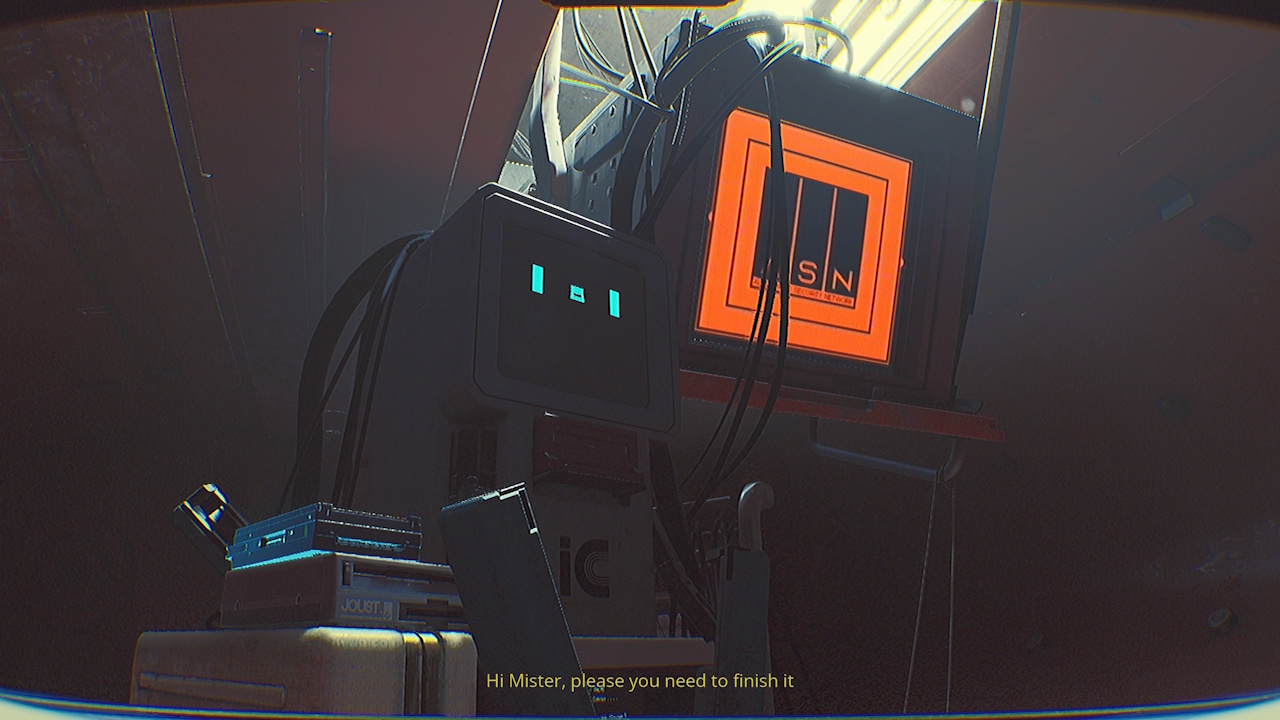
The most interesting implementation of these systems can be found in the save system. Strewn throughout the facility are projectors displaying a ‘wireless’ signal. Flipping a switch on the CAT turns these projections into mini computer displays, revealing the CAT to be less a smart gun and more a computer that shoots lasers. Here the game keeps what would typically go into an inventory screen, access codes and a checklist for your tasks. There’s something charming about these being kept in your gun, but beyond that it’s another instance of the game’s masterful pacing. You’ll have to commit the information to memory if you don’t want to constantly move back and forth since the CAT doesn’t let you access that data natively.
Flowers For Armstrong
All of this is in service of a world that feels physical in a way so few games ever do. As you drudge your way through the base piecing together puzzles there’s a palpable sense of space. Each environment feels like you can reach out and touch it, more so than some actual places I’ve been to in the real world, let alone a virtual one. It’s such a strong sensation that I’m always sad to remember the game’s mechanics don’t really offer a way for you to really do this. Routine isn’t an immersive sim. You won’t be fondling the environment like in SOMA or Amnesia, whose systems are novel, but admittedly don’t offer much in the way of meaningful interaction. Routine also isn’t Resident Evil. You’ll be moving from point A to point B, completing puzzles and hiding from enemies, but never directly interacting with them. Despite the CAT’s appearance (it always reminds me of the gravity gun from GANTZ) it’s clear the devs not only want you to avoid combat, but have done everything in their power to dissuade you from it. In a horror game feeling powerless is a major component to keeping the game tense so it’s understandable they don’t want you gunning down enemies left and right, but the game doesn’t offer any sort of system to replace combat, making it feel flat.
This is an issue outside of Routine, innate to the Amnesia-likes that pervade the industry now. In lieu of combat the player is expected to rely on stealth, but these systems are barely developed. If you opted to never fire your gun in Call of Duty, instead just running past squads of enemies, you’d effectively be playing the same way that these titles expect you to. Proper stealth titles like Metal Gear Solid and Splinter Cell design environments to allow the player to bypass patrols and minimize detection, while these games just want you to wait for the room to be empty before walking through it normally. At one point, I found a message from the administration about how the system responds to fire alarms going off, sending a machine to assess and contain it. I immediately began looking for an alarm to pull, assuming I could lock one of the patrolling droids into a room using this method and get them off my back, but no such system existed. In fact, I quickly found robots could open doors so easily closing them seemed to just make my work harder.
After finishing Routine I went back and played through the opening again and began using my CAT’s combat functions more liberally. What I found was through the layers of obfuscation lay a combat loop that was simple, satisfying, and tense. With a maximum of three shots, two of which are needed to down an enemy temporarily, I can’t help but feel the game should have fully invested in this system instead. Maybe a mechanic where each shot needs to be manually loaded, or consume more battery requires more forethought. There’s no scenario where Routine turns into a glorified arena shooter ala Dead Space, so why not increase the reward? At one point, the team talked about upgrades for the CAT that would alter refresh rate or power consumption, systems completely missing from the final release. Mechanics like these may make for a more gamey time, but I think they’d also make the world feel more reactive. As is, it’s hard not to look at Routine like an incredibly impressive haunted house. Enjoy the attraction, but please do not touch the performers.
Pan and Scan Cosmonautos
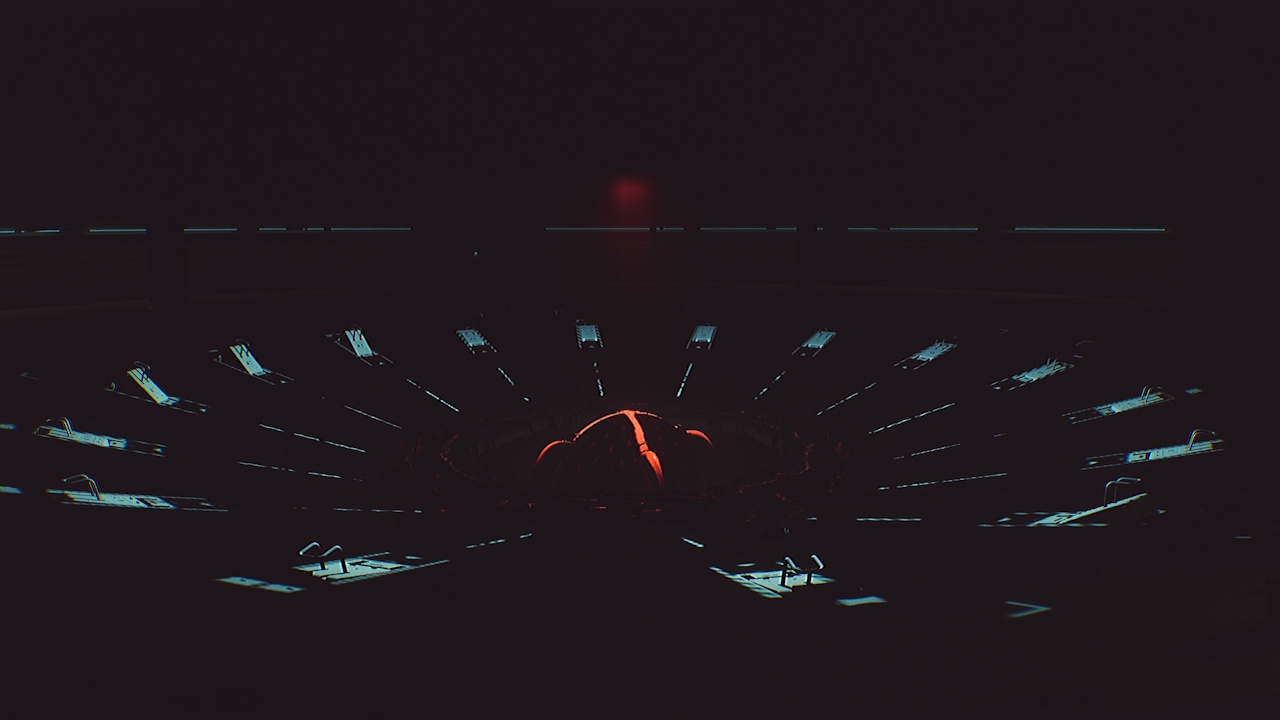
Discussing Routine and its systems is a bit difficult in part because of its structure. Similar to the novel Dune, Routine feels split down the middle, like two separate projects welded together. The first, familiar, the second esoteric.This second half is where the game’s design ethos and so-so story come into their own, pulling from more interesting influences and relying more on paranoia for its atmosphere. Routine has the standard set of familiar influences, a healthy dose of Alien and some Interstellar for flavor, but its back half pulls from the relatively obscure Beyond The Black Rainbow to fantastic effect. It’s here Routine reveals its greatest influence: Analog Horror. Rising to prominence in the mid-2010s after Routine had begun its slumber phase, Analog Horror became a major force on YouTube where young creatives relied on the outdated look of the home camcorder to add spice to oblique spook shows. The genre is a personal favorite, and while it feels like it’s on the way out, Routine may be enough to give it a second wave, or at least a grand finale.
Routine may not be much more than this, but it’s so expertly crafted I can’t help but love it. Routine isn’t quite the only fish in this stylish little pond, most notably Starfield put a name to the Alien-esque retro look with “NASA-punk.”Even if Bethesda beat them to market, I think the team behind Routine have crafted something far more impressive. That might be because the game’s scope is a hundredth that of Starfield, but it was also developed by a hundredth the staff. Routine is not a sprawling experience, it’s a tight five hour playthrough and while that may be a bit underwhelming to some, I found it expertly paced. Routine certainly doesn’t overstay its welcome, but it’s no slouch either. Tucked away in that tight timeframe are some of the best scares I’ve had in a long time. To add to this, Routine has a mood so unique I’m a bit sad it doesn’t have a SOMA style enemy-less mode to drink it in more leisurely.
Summary
Routine is a game I wholeheartedly recommend. While its combat feels undercooked and its story is familiar, I can’t remember the last time every aspect of a game had such a tactile response from me. It’s a lonely journey through a cold world that I’ve found myself drawn to continuously since I finished it. With this, one fact keeps coming back to me — nearly 15 years after I first saw it, Routine is out, and it’s good. It’s really good!
