

The loss of Chainsaw Man will be felt for generations, if only because I won’t let anyone forget about it. It seems quaint to remember when the manga first started and the discussion around it was predominantly whether Shonen Jump would cancel it to avoid controversy. There was more blood in its first chapter than all of Dragon Ball, and nearly as much nudity in the first volume. This gonzo approach was more than enough to keep me invested, but by the end of its first arc, it was apparent the series had built a stronger ethos than that. In comparison to the overly celibate, submission leads of most shonen, Chainsaw Man’s titular hero — Denji — was refreshingly base in his desires. Eat good, sleep good, and start screwing.
Vulgar as they may be, Denji’s wants are the fundamental ones needed to live a satisfying life. Security of self, security of food, and security of support. Nearly all of this comes to Denji by way of a small devil he meets when he’s a kid. This devil, Pochita, bonds with Denji and turns him into the titular Chainsaw Man, landing him a gig as a devil exterminator with the State, and opening him up to misadventures with his unruly cohorts. This part of the series, retroactively known simply as “Part 1” is broadly about finding out the hard lessons of adolescence inbetween blood splatter set pieces.
In one pivotal scene, Denji makes a deal with a friend to feel her up in exchange for helping her, but when it comes time to collect, Denji discovers the action is largely meaningless as he isn’t attracted to her. It’s a stark, ugly lesson that I have to assume saved at least one high school reader some grief in a way Luffy and Ichigo never could.
Now, nearly a decade later, the series has ended, and while many takes on the series have been cynical — “what was it all for?” — I can’t help but feel the last chapter of Chainsaw Man may hide another vital lesson for those needing to hear it. This should hopefully be obvious, but spoilers ahead for the full series.
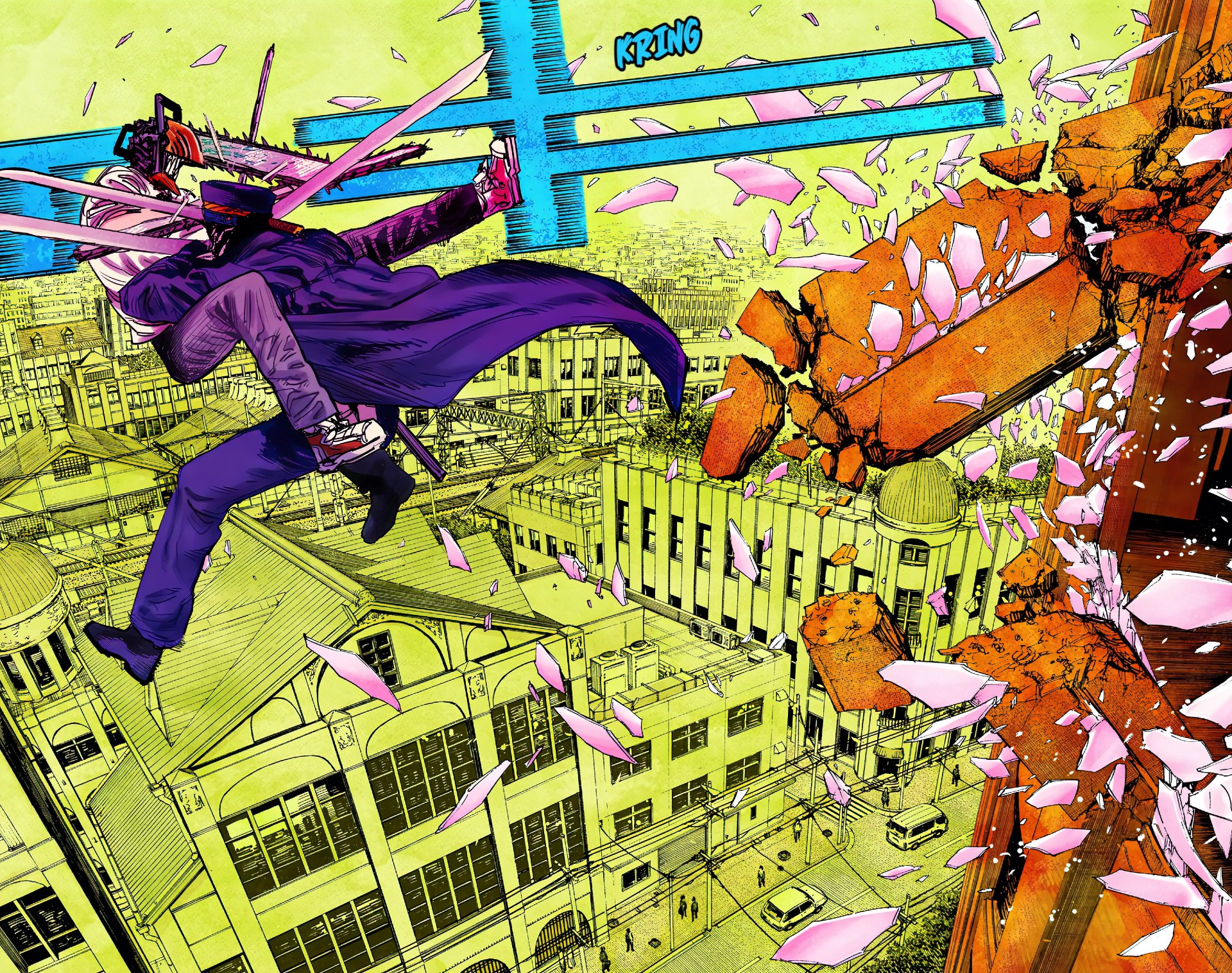
Goodbye all of Chainsaw Man!
Across Part 1, a building mystery around who or what Pochita was begins to develop. In the narrative, devils who die in Hell seem to reincarnate on Earth in a weakened state, and presumably return to Hell when killed here. For some reason, various devils remember a chainsaw at the moment of death, and grow resentful. As a result, most arcs of the story involve monsters from Pochita’s past coming to kill Denji and take his heart for themselves, as it seems to be the remnant of Pochita’s body. Nowhere is this felt more starkly than Makima, the beautiful boss who gives Denji his job as a devil hunter and wins his heart. Early on, Makima’s blunt direction is off-putting, but clearly becomes a sort of bedrock for Denji and others to lean on. Once she becomes a load-bearing support in his life, Makima pulls back the curtain to reveal she too desires Pochita, though for her own esoteric means.
Pochita does not just hold immense power as a devil, but the bizarre ability to “erase” the concepts of devils he eats. As Makima puts it, were Pochita to eat the devils that represent war or death, humanity may be able to enter an era of peace, but this appears to be a facade. As the conflict grows, it becomes apparent that Makima holds Chainsaw Man in high regard, fetishizing his stoic nature. Denji, whose personality is flat and clear and bold, is the antithesis of the Chainsaw Man she so desires. And so, she seeks to resurrect the original Pochita. To do this, she must traumatize Denji so badly that Pochita takes back control to set things right.
Most of Pochita’s antics in this state are played for laughs, but there’s a sad undercurrent to them. Pochita, as his fully-powered devil self, is unable to retract the saws in his arms, leading him to massacre people around him by accident. While trying to mimic Denji’s idealized life, he slaughters the servers and destroys the restaurant. He leaves Denji’s date a whimpering wreck, and largely fails to provide the stability he needs. Pochita only succeeds by bringing in a wringer, a blood devil whom Denji is close friends with.
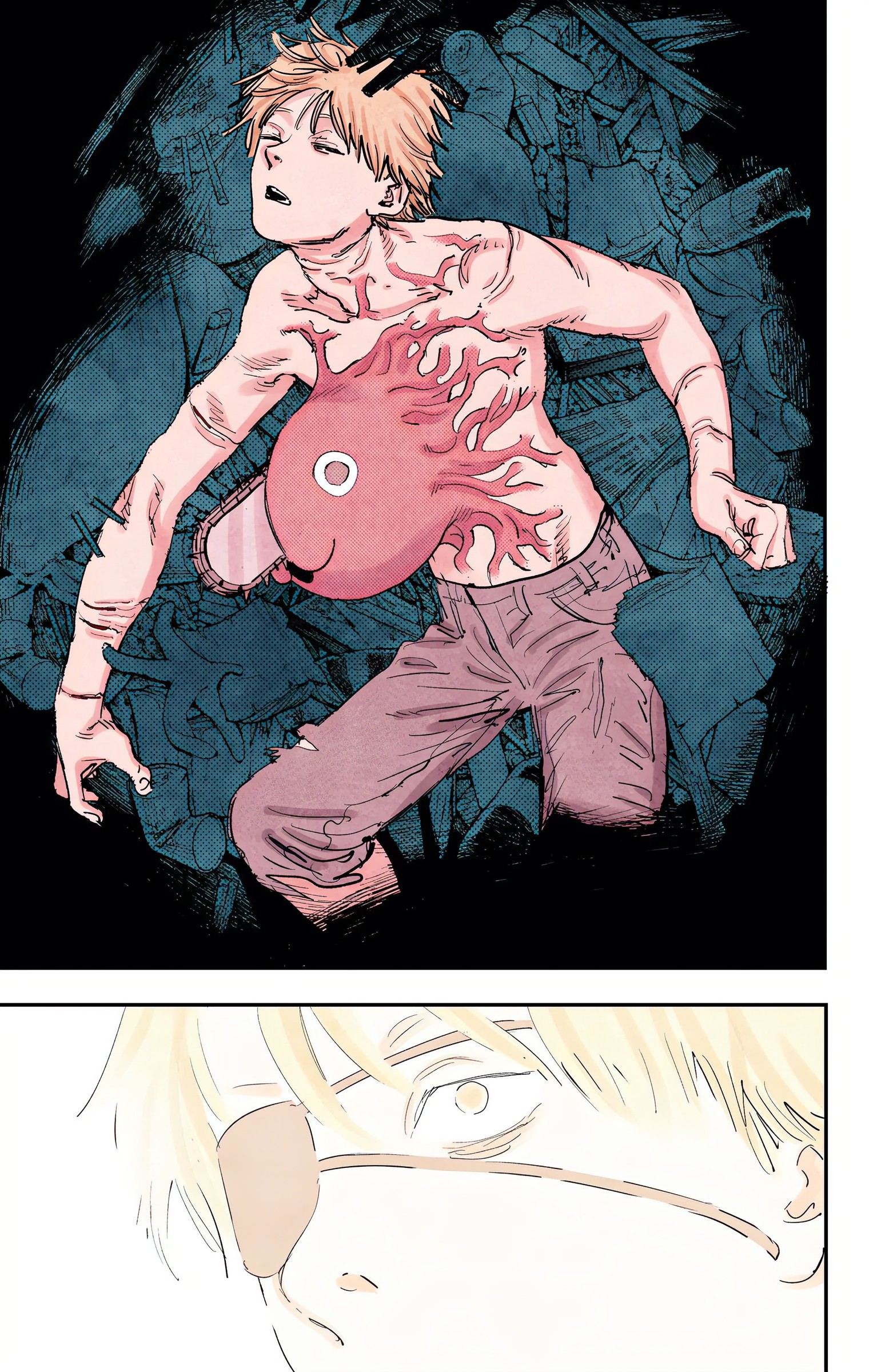
And yet Pochita doesn’t falter. When Makima is finally defeated, in part because of Denji’s unwavering feelings, she too is reborn in a lessened state. Pochita, in one of the few moments of direct discussion he has with Denji, prompts him to basically pay it forward, to give this new Makima the same affection Denji gave him in hopes she too can be changed. In Makima’s desire for Pochita, she took to systematically destroying the only person Pochita ever loved. In response, he shared that love with her. It works. When we later see Nayuta, Makima’s reincarnated self, she’s every bit as vulgar as Denji, but has a healthy home and school life.
If there’s a core theme to Chainsaw Man’s first part, it’s that reciprocal love is extraordinarily difficult to defeat. If that’s a read you haven’t seen before, a week ago from writing this, it’s not one I might have made. Part of this is because of the way Pochita reads to the viewer. Aside from the first chapter, Pochita has almost no on-screen time and minimal dialog. When he first appeared as his full-powered self, we weren’t even positive that was Pochita and not some ultra instinct Denji. The specifics of his contract with Ddenji wouldn’t be revealed until well into Part 2, and as a result pochita read to us the same way he read to Makima, stoic and unyielding. It’s a belief that Part 2 seems designed to shatter.
Kicking off roughly a year after the end of Part 1, Part 2 follows new heroine Asa Mitaka. A dark, introverted woman who resents others to protect herself from the pain of connections, Asa finds herself caught up in the world of devils when the war devil Yoru forms a contract, taking control of half her body. Where Pochita was content to sit back and observe, Yoru forces herself into Asa’s life. Yoru also represents a deeper aspect of Asa; her repressed wants and desires. When Asa meets a cute boy and immediately puts herself down for thinking he might like her, Yoru takes over and demands he become her boyfriend. When Asa feels distance on a date, Yoru closes it and kisses him suddenly. Yoru is even visualized as Asa with her hair down and scars across her face, hardened and unreserved.
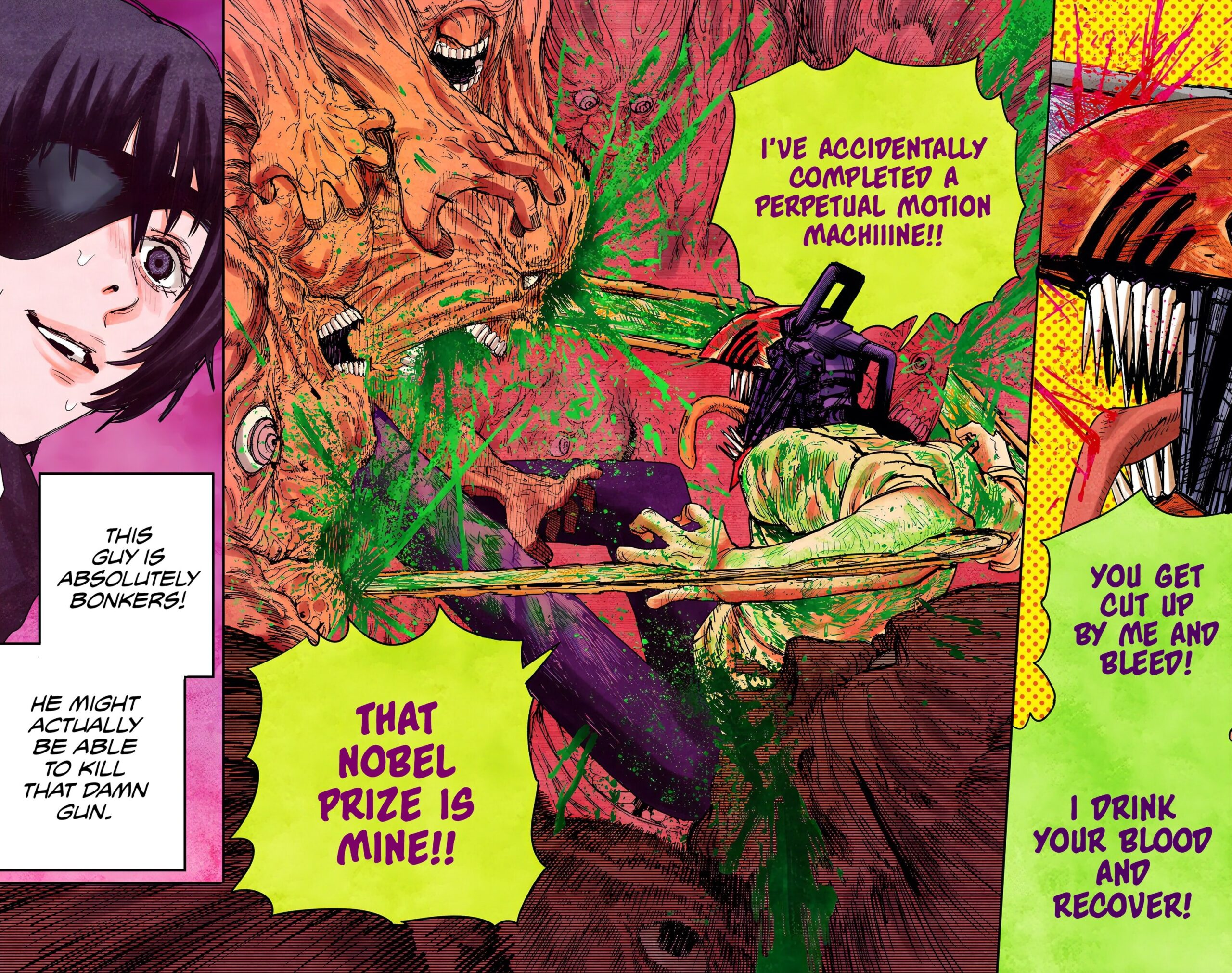
Birds of a feather
Early Arcs of Part 2 see Asa navigating her life with Yoru, encountering a relatively stable Denji in her misadventures. When trapped by a devil from his past, Denji keeps a cool head and connects to Asa, drawing out her more vibrant aspects. Their connection feels natural and sweet, but Asa’s own insecurities sabotage the relationship before it can begin, with Nayuta driving in the final nail out of fear that Denji will be manipulated and hurt by another devil in a woman’s body. As the two are drawn deeper into conspiracies around them, their desires for companionship distort with Asa sacrificing herself in a morbid ritual for Chainsaw Man from afar by dedicating her life to devil hunting, While Denji resents her for taking his place in the zeitgeist after the State draws an ultimatum: give up Chainsaw Man or give up Nayuta.
Denji complies with the mandate, but without a meaningful support system his life feels hollow. Even when taking care of Nayuta, he feels a pang for being Chainsaw Man, and begins to resent himself for it. He should be happy, he has a family and a life now, but he isn’t. Denji, by virtue of being half decent, has been thrust into the position of father without a companion. His one release, Chainsaw Man, has been taken from him. When the conspirators come together to put down their home, killing their pets in the process, Denji is elated and disgusted. Elated to have an excuse to be Chainsaw Man again, and disgusted at the joy he feels in place of his grief. As Denji will later recount, he can never go back to how things were.
Now with no support and no security, Denji doubles down on his desires for sex, shifting from a healthy desire for reciprocation to a dangerous coping mechanism. This is also the first time Denji and Asa reconvene after months of separation, with Asa having spent the time romanticizing Chainsaw Man into a romantic knight in shining armor. Faced with the reality of Denji as a man desperate for affection, Asa remains silent while another member of their group opts to take him to a brothel, only to find it’s been destroyed by a devil attack. In a moment of clarity, Denji’s regret is so high that he asks to be castrated, an obscene overreaction that Yoru agrees too.
This moment reveals a deep disparity between Asa and Denji and how they view their relationship. For Asa, this is the only moment of physical intimacy she’s ever had, a moment that deepend with the revelation Denji and Chainsaw Man are one in the same. As a result, she views their reunion as a major moment, one soiled by Denji’s desire for meaningless sex with other women. It is perverse to sleep with a sex worker, an obscenity that her Chainsaw Man would never commit. For Denji, it was Tuesday. To cope with the near constant loss in his life, Denji has moved on too quickly from loss, leaving him ill-equipped for long-term relationships. Despite his desire for companionship, Denji never dates nor befriends anyone. He is distant to his classmates and his only attempts at dating are set up by Yoshida, a government spook working to keep a handle on Chainsaw Man. When a cult offers to give Denji a partner, he’s intrigued until they reveal he must marry them. Denji and Asa ultimately want the same thing, to be loved without having to love. To receive unconditional praise and comfort from someone who sees and understands them in their totality without any of the footwork required to reach that point. If Asa doesn’t get it, she resents the person and projects her own self loathing onto them. If Denji doesn’t, he cuts them off and moves on to the next one.
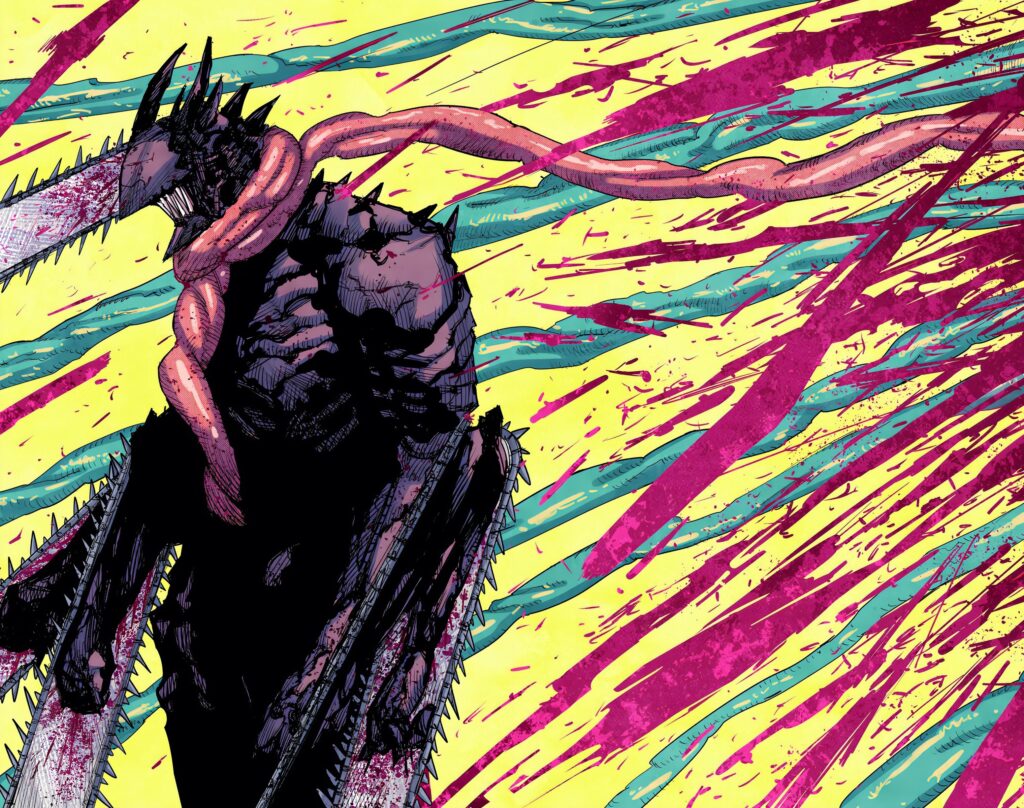
Love thyself, love the world
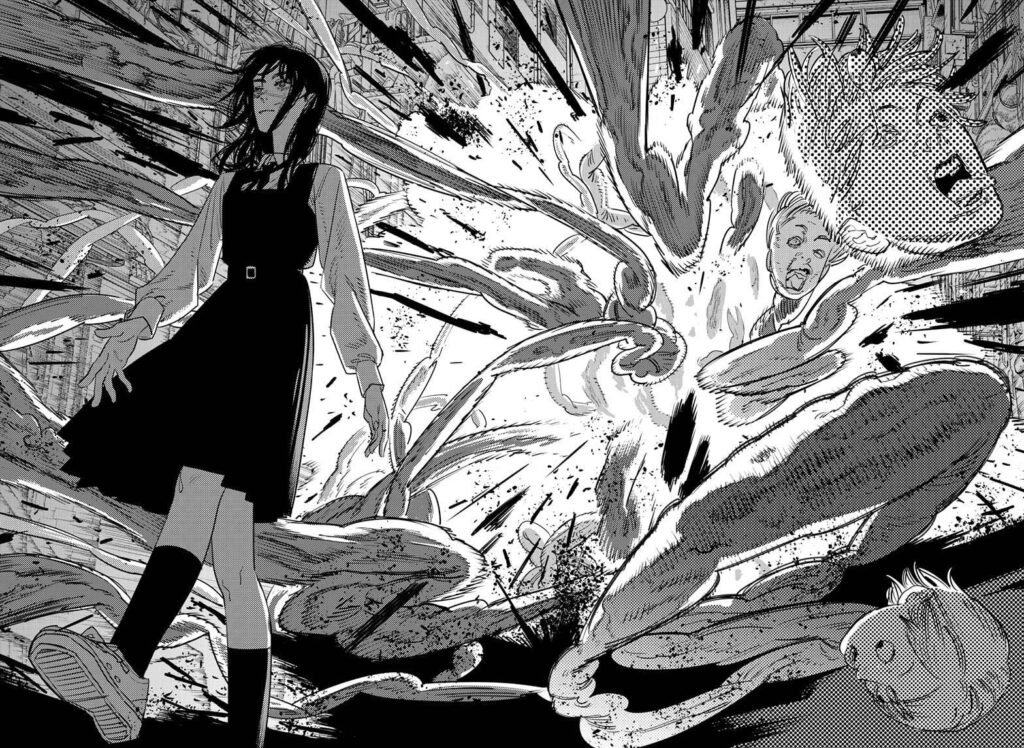
The final act of Part 2 is broadly a battle between Pochita’s full power form and Yoru, embolden by international war. Here, as their others battle it out, Denji and Asa meet in the internal world between them. Here, we learn the root of their self-hatred. Both Asa and Denji had abusive fathers whose deaths they played a part in. and yet, Despite this deep sin, they both desire love, they both desire companionship. For Denji, he offers an olive branch, but for Asa, who sees self-sacrifice as the ultimate form of love, she offers a means for Denji to kill Yoru once and for all. Unfortunately, Denji isn’t in control, and Pochita doesn’t take the chance. Instead the conflict continues, never ending. At the apex of the fight, with Denji back in control and bleeding out, Yoru arrives to land the final blow, only to find a bird in the middle of her path. Yoru, swerving to avoid it, injures herself, a wound she can’t regenerate because it wasn’t from an external attack. Asa, whose story began with her tripping and crushing a minor devil in the form of a chicken, asks Yoru why she swerved to miss the bird, to which she simply says: “You hate it when birds die.”
This final revelation, that Yoru has genuine love and affection for Asa and her well being, almost seems obvious in hindsight. For Asa and Denji to mirror each other so thoroughly, Yoru being anything but an agent of Asa’s unspoken will would be inappropriate. Just as Denji and Asa desire the same thing but use different methods to protect themselves, Pochita and Yoru seek to bring happiness to their hosts. One by providing power and guidance, the other by acting out their suppressed desires on their behalf. Neither are effective because by joining with devils of such incredible power, the hosts are inevitably drawn into the crossfire of the enemy.
At the end of it all, when their fight is done, Denji is done in by an unknown devil, part of a group of devils seemingly waiting for the opportunity to join the fray. Here, in the limbo of a devil’s stomach, Denji and Pochita have one final conversation. Pochita’s final move is to eat his own heart, erasing himself from existence and maybe giving Denji a chance at a normal life. It’s a moment that feels borderline cruel with the common characterization of Pochita as an objective observer, especially given how bleak Denji’s life appeared before him. But with the full context of Yoru and Asa, we can form a second interpretation of Pochita. This one not of a stoic father but of reserved friend. One who shares Denji’s insecurities about connecting with others and instead opts to avoid direct interference. A friend whose self hatred is so intense in manifests in a dangerous mindset: “They’d be happier if I was never around.”
It’s a wonderful life, mostly
In the last scene of Pochita and Denji, Pochita tells Denji there was always a part of him that was unhappy, and it’s hard not to view those remarks as critical, but I think they may not refer to Denji at all, but as Pochita. Merged together, Pochita sees that just like Yoru has led Asa down a path of indulging her worst traits, Pochita has done the same. The power given to Denji only brought forth Pochita’s own baggage, his literal devils to try and tear him down. By being together, Pochita can only drag Denji down. So the final question of Chainsaw Man may be the ugly question everyone who hates themselves must ask — “Would they be happier if I was never around?”
And the answer? It’s a mixed bag. Denji’s life is broadly the same. Some people are certainly happier, though there are effects from Pochita’s actions that seem to defy his erasure. For Denji, his life seems more stable but less enjoyable. Easier lows, but less highs. An old friend is back, and others may have been spared a lot of grief, but if Pochita’s goal was for Denji to be happy, he hasn’t quite succeeded. Instead, in a single panel, we see a part of Pochita lives on in Denji’s heart, still bearing the distinct marks of Pochita’s possession. Even in a world where he never existed, Pochita, like all friends, is woven into Denji.
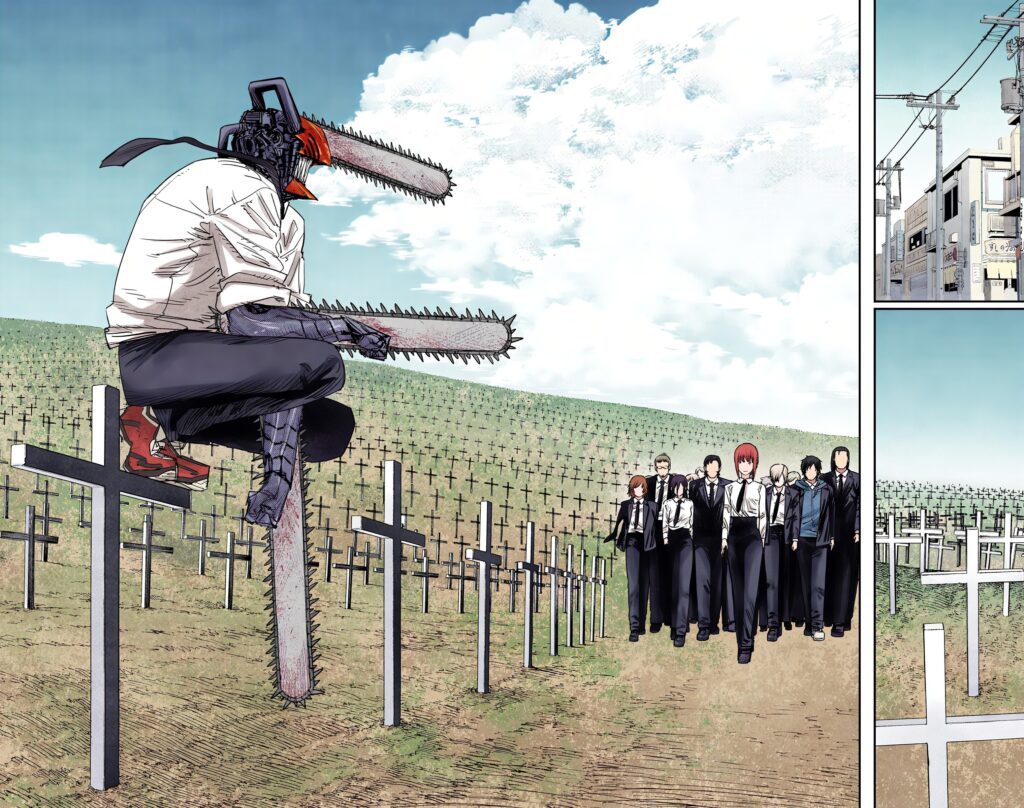
As I write this, out it’s been less than 12 hours since the release of Chainsaw Man’s final chapter, and nearly eight years since it started at the very end of 2018. Across that time I can tie dozens of specific moments in my life since then. It’s hard to read these final chapters and not feel like I’m losing something as intertwined with myself as Pochita was with Denji. There are times where I felt genuine complete elation reading a chapter, excitedly trying to explain to my extremely patient friend what made me so stunned by this week’s entry. It’s a special comic, and its finale, while sudden, feels like it’s given me a piece to a puzzle I had no clue I was trying to solve. Maybe it’s saved me a lot of grief.